What curing actually does — and why we wait fourteen days
A candle poured on Monday and sold on Tuesday will smell weak. Curing is the invisible step that decides whether a candle fills a room.
When a candle is poured, the fragrance oil and the wax are mixed but not yet bound. They are sharing a container rather than becoming one thing.
Curing is the period where that changes. Nothing visible happens. It simply has to sit.
Cold throw and hot throw
Two different measurements, and people confuse them constantly.
Cold throw is how a candle smells unlit, when you take the lid off. Hot throw is how it smells burning, and how far that scent carries.
An uncured candle often has a good cold throw and a disappointing hot throw. The oil sitting loose in the wax evaporates readily at room temperature — so it smells strong in the jar — but has not bound into the wax structure, so when the pool melts the fragrance does not lift and travel the way it should.
This is exactly why a candle can smell wonderful in the shop and do almost nothing at home.
What happens in two weeks
The wax finishes crystallising. Natural waxes keep setting for days after they look solid, and the fragrance molecules settle into that structure as it forms.
Different waxes want different times. Soy blends want two weeks. Coconut blends are more forgiving. Paraffin needs less, which is one reason mass-produced candles can ship quickly.
We rest ours fourteen days in the dark before anything is packed. It is the least glamorous part of making a candle and the one that makes the most difference.
Why light matters
Direct sunlight fades colour and degrades some fragrance compounds, particularly citrus. Cured candles are stored away from windows.
The same applies at home: a candle left on a sunny windowsill for a month will smell noticeably flatter than one kept in a cupboard.
Testing
One candle from each batch is burned for its entire life. If the melt pool is uneven, if the throw is weak, or if the wick mushrooms, the batch does not ship.
It is an expensive way to work — you lose a candle from every batch — but there is no other way to know what a customer is actually going to get.
Continue reading
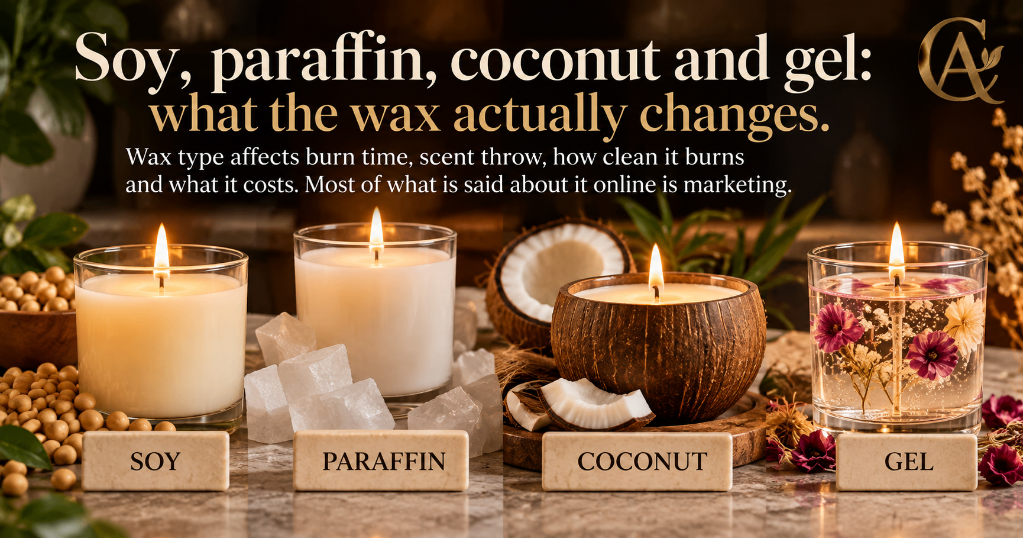
Soy, paraffin, coconut and gel: what the wax actually changes
Wax type affects burn time, scent throw, how clean it burns and what it costs. Most of what is said about it online is marketing.
By Candle Alchemist ·
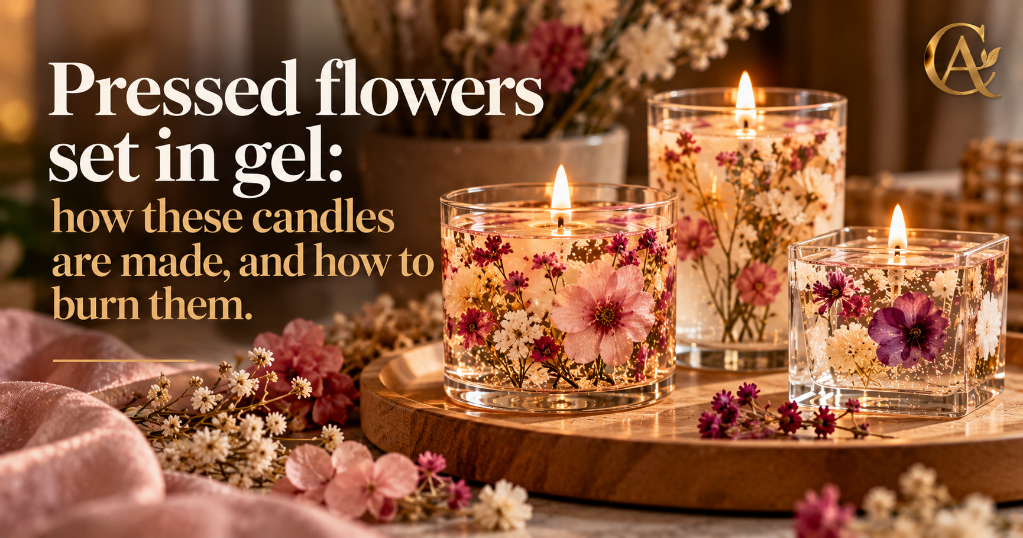
Pressed flowers set in gel: how these candles are made, and how to burn them
A botanical gel candle is built in layers around real dried flowers. They are the most-photographed candles we make and the most misunderstood.
By Candle Alchemist ·
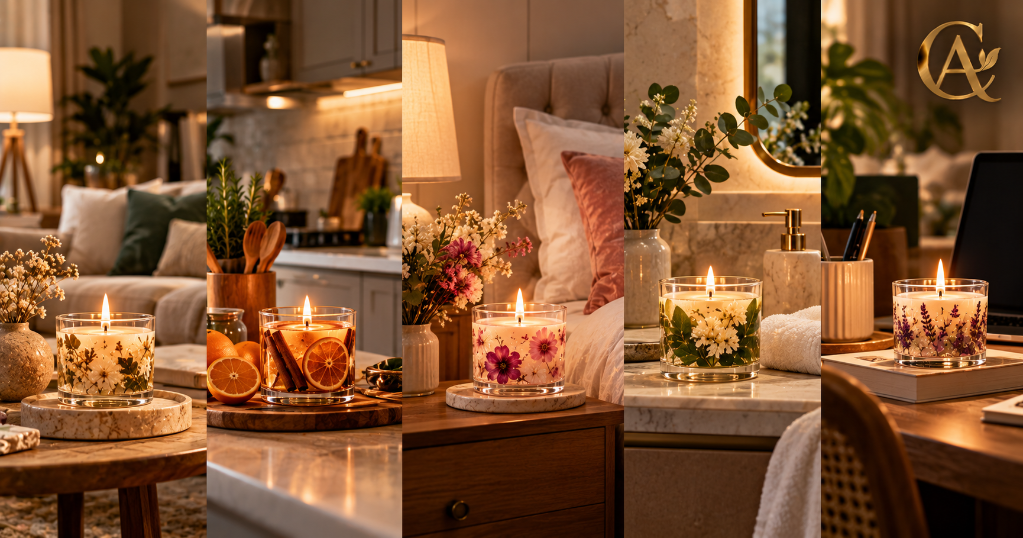
How to choose a candle scent for every room in your home
The right fragrance for a bedroom will be wrong in a kitchen. Scent choice is mostly about room size, airflow and what the space is for.
By Candle Alchemist ·