
Soy, paraffin, coconut and gel: what the wax actually changes
Wax type affects burn time, scent throw, how clean it burns and what it costs. Most of what is said about it online is marketing.
Wax is the single biggest factor in how a candle behaves, and it is the thing customers are told the most nonsense about.
Here is a straight comparison.
Paraffin
A petroleum by-product, and the most common candle wax in the world.
Good at: excellent scent throw, holds colour brilliantly, cheap, forgiving to work with.
Less good: produces more soot than plant waxes, especially with an untrimmed wick. Burns faster than soy.
The claim that paraffin candles are dangerous to health is not supported by the evidence at normal domestic use. The soot is a genuine nuisance on light walls though.
Soy
Made from soybean oil. The default for small-batch makers.
Good at: burns slower and cooler than paraffin, so a candle lasts longer. Very little soot. Cleans up with soap and hot water.
Less good: weaker scent throw unless the fragrance load and wick are properly matched. Prone to frosting — those white crystalline patches on the surface — which is cosmetic, not a fault. Needs a longer cure.
Coconut and coconut blends
Increasingly the choice for premium candles.
Good at: excellent throw, very clean burn, smooth surface, holds fragrance well.
Less good: soft, so it usually needs blending with a firmer wax. More expensive than either soy or paraffin.
Gel
Not a wax at all — a mineral-oil-based medium that sets transparent.
Good at: the only option if you want to suspend flowers, shells or anything else visibly inside a candle. Burns considerably longer than wax by volume.
Less good: lower fragrance capacity than wax, so gel candles are usually more visual than aromatic. Requires specific containers that tolerate heat.
What actually matters more than wax type
The wick. A wick that is too small tunnels regardless of wax. Too large and it smokes. Getting this right for a specific vessel and fragrance load takes testing, and it is where most cheap candles fail.
Fragrance load. How much oil the wax holds — usually 6 to 10 percent. Higher is not automatically better; past the wax's capacity the oil separates and pools.
The cure. An uncured candle in the best wax available will still smell weak.
If you are choosing between two candles, ask about the wick and the cure before you ask about the wax.
Continue reading
How to choose a candle as a gift when you do not know their taste
Fragrance is personal, which makes it risky as a gift. There are ways to make a safe choice that still feels considered.
By Candle Alchemist ·
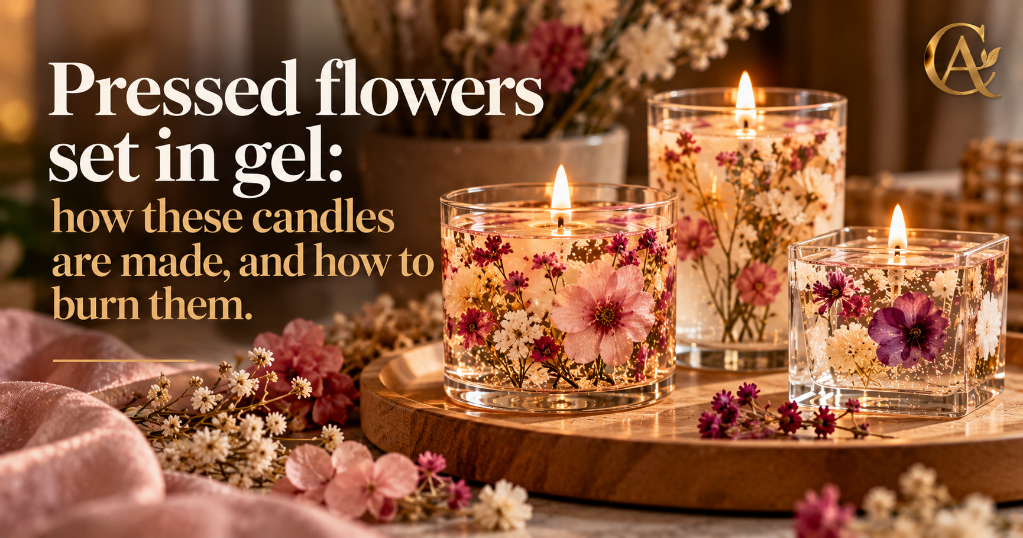
Pressed flowers set in gel: how these candles are made, and how to burn them
A botanical gel candle is built in layers around real dried flowers. They are the most-photographed candles we make and the most misunderstood.
By Candle Alchemist ·
What curing actually does — and why we wait fourteen days
A candle poured on Monday and sold on Tuesday will smell weak. Curing is the invisible step that decides whether a candle fills a room.
By Candle Alchemist ·