How to Make Your Home Smell Beautiful, Feel Calmer, and Make Every Candle Last Longer
A beautiful candle is more than wax and fragrance. Discover the simple candle-care rituals that can help your candle burn more evenly, smell better, last longer, and turn an ordinary moment into something special.
# The Candle Ritual: How to Make Your Candles Last Longer and Smell Better
There is something almost magical about lighting a candle.
A tiny flame can completely change the feeling of a room. A familiar fragrance can bring back a memory, make a bedroom feel calmer, turn an ordinary dinner into an occasion, or make a few quiet minutes feel like a ritual.
But there is something many candle lovers discover only after bringing a beautiful candle home:
A candle is only as good as the way you burn it.
The wax, wick, fragrance, vessel and curing time all matter, but so does what happens after the candle reaches your home.
At The Candle Alchemist, we believe candle care should never feel complicated. It should simply become part of the experience.
Light slowly. Let it melt properly. Let the fragrance unfold.
Your First Burn Matters More Than You Think
The first time you burn a candle is especially important.
When you light a candle, the wax around the wick begins to melt and forms a liquid wax pool. Ideally, the melt pool gradually expands across the surface of the candle.
If you extinguish the candle too quickly, only the wax around the wick may melt.
If this happens repeatedly, the candle can develop a memory of that smaller melt pattern.
Eventually, you may notice a deep hole forming around the wick while a thick layer of unmelted wax remains around the sides.
This is known as candle tunnelling.
And once tunnelling becomes severe, it can be difficult to correct.
How Long Should You Burn a Candle?
There is no single burn time that works for every candle because candle performance depends on factors such as wax type, vessel diameter, wick size and fragrance formulation.
As a general candle-care practice:
- Allow enough time for the wax to melt appropriately across the surface.
- Avoid repeatedly burning the candle for only a few minutes.
- Never leave a burning candle unattended.
- Keep the candle away from drafts and moving air.
- Follow the specific burn instructions supplied with your candle.
- Stop burning if the vessel becomes excessively hot.
The goal isn't to burn a candle for as long as possible. The goal is to burn it correctly.
Trim Your Wick Before Every Burn
One of the easiest candle-care habits is also one of the most frequently forgotten.
Trim the wick.
As a candle burns, the wick can become longer and develop carbon build-up. A wick that is too long can produce a larger flame and may contribute to excess soot or smoke.
Before lighting your candle again:
1. Allow the candle to cool completely.
2. Remove any loose wick debris.
3. Trim the wick according to the candle maker's recommendation.
4. Make sure the wick remains properly positioned before lighting.
Think of it as giving your candle a small reset before its next burn.
Why Does My Candle Smell Different When It Is Burning?
Have you ever smelled a candle in the jar and absolutely loved it, only to notice that the fragrance feels different once the candle is lit?
That's completely normal.
There are two different fragrance experiences associated with candles.
Cold Throw
Cold throw is the fragrance you experience when the candle is not burning.
You may open the lid and immediately notice vanilla, rose, citrus, sandalwood, amber or another fragrance note.
Hot Throw
Hot throw is the fragrance released while the candle is burning.
Heat changes the way fragrance is released into the surrounding air, which means a candle can smell subtle when cold but much richer once it is burning.
This is why choosing a candle based only on how it smells in the jar doesn't always tell you what the complete experience will be.
The real fragrance experience happens when wax, wick, heat and fragrance work together.
Room Size Can Change Your Fragrance Experience
The same candle can smell completely different in two different rooms.
A small bedroom may become beautifully fragrant with one candle, while a large living room may require a different candle size, fragrance strength or placement.
When choosing a candle, consider:
- Room size
- Ceiling height
- Airflow
- Open windows
- Fans and air conditioners
- Furniture and textiles
- Candle size
- How long the candle is burning
A candle placed directly beneath a strong ceiling fan may behave differently from one placed in a calm corner of the room.
This is why fragrance selection isn't simply about choosing your favourite scent.
It is also about understanding the space where the candle will live.
Match the Fragrance to the Mood
Instead of asking:
What fragrance should I buy?
Try asking:
What do I want this room to feel like?
For the Bedroom
Bedrooms usually benefit from softer, comforting fragrance families.
Consider:
- Lavender
- Vanilla
- Soft florals
- Sandalwood
- Powdery notes
- Gentle amber
For the Living Room
This is where you can experiment more.
Try:
- Woody fragrances
- Warm spices
- Florals
- Citrus
- Amber
- Gourmand blends
For the Kitchen
Fresh and uplifting fragrances can work particularly well.
Consider:
- Lemon
- Orange
- Citrus blends
- Herbal notes
- Fresh green fragrances
For the Bathroom
Clean and refreshing fragrance families can create a spa-like atmosphere.
Think about:
- Eucalyptus
- Mint
- Citrus
- Fresh florals
- Herbal blends
There are no absolute rules.
Your home should smell like you.
Don't Judge a Candle by Its First Five Minutes
A candle is a little like perfume.
You don't experience the entire fragrance story in the first few seconds.
As the candle burns, different fragrance notes can become more noticeable. A bright citrus opening might eventually develop into floral, woody, creamy or warm notes.
This is why fragrance descriptions often talk about:
Top notes → Heart notes → Base notes
A candle isn't necessarily just "vanilla" or "rose."
It can be an entire fragrance journey.
And that journey is part of what makes beautifully formulated candles so special.
Why Candle Curing Matters
One of the least visible stages of candle making happens after the candle has already been poured.
Curing.
Once wax and fragrance come together, the candle needs time to settle and develop.
The ideal curing period depends on the wax system, formulation and manufacturing process, but many handcrafted candles benefit from resting before their final fragrance performance is assessed.
That means the candle sitting quietly on a shelf may actually be going through one of the most important stages of its life.
It may look finished.
But the process isn't necessarily over.
Some of the most important parts of candle making happen when nobody is watching.
At The Candle Alchemist, patience is part of the process.
A candle isn't simply finished because the wax has become solid.
The Secret to a Better Candle Experience? Don't Rush It.
We live in a world where everything is instant.
Instant messages.
Instant deliveries.
Instant coffee.
Candles are different.
They invite you to slow down.
Light one while reading.
Light one during dinner.
Light one while taking a bath.
Light one when the house finally becomes quiet.
You don't need a special occasion.
The ordinary evening can be the occasion.
Three Candle Mistakes to Stop Making
1. Burning Your Candle for Only a Few Minutes
Repeated short burns may prevent the wax from developing an appropriate melt pattern.
Give your candle enough time to burn properly according to its specific instructions.
2. Ignoring the Wick
A wick that becomes too long can affect flame behaviour, soot production and overall burn performance.
Regular wick care can make a noticeable difference.
3. Treating Every Candle the Same
Soy, paraffin, coconut, gel and blended wax systems can behave differently.
Different vessels, wick sizes and fragrance formulations can also affect how a candle performs.
Good candle care starts with understanding the candle in front of you.
What Makes a Beautiful Candle Different?
At The Candle Alchemist, we don't believe candles should simply look beautiful sitting on a shelf.
They should create an experience.
From selecting wax and fragrance to pouring, curing, decorating and packaging, every stage contributes to that final moment when you light the wick.
A handcrafted candle can feel different because of the decisions, details and patience that go into creating it.
And then, finally, it becomes yours.
The Candle Alchemist Philosophy
We believe a candle should bring together:
Scent. Style. Soul.
It should look beautiful in your space.
It should smell beautiful when lit.
And most importantly, it should create a feeling.
Whether you're lighting a candle after a long day, decorating your home for guests, creating a romantic dinner setting or choosing a thoughtful gift, the right candle can become part of the memory.
The Final Flame
The next time you light your favourite candle, don't simply light it and walk away.
Watch the flame.
Notice how the wax begins to soften.
Notice how the fragrance gradually moves through the room.
Notice how the atmosphere changes.
Because that is what a candle does best.
It doesn't simply make a room smell beautiful.
It changes how the room feels.
And sometimes, that tiny flame is all you need to turn an ordinary moment into one worth remembering.
Candle Care Checklist
Before your next burn, remember:
- Trim the wick according to the candle maker's recommendation.
- Place the candle on a stable, heat-resistant surface.
- Keep it away from drafts and flammable objects.
- Allow the wax to melt appropriately instead of repeatedly burning for very short periods.
- Never leave a burning candle unattended.
- Follow the manufacturer's recommended maximum burn time.
- Stop using the candle when the remaining wax reaches the level recommended by the manufacturer.
- Allow the candle to cool before moving or relighting it.
Discover The Candle Alchemist
At The Candle Alchemist, every candle is created to bring together scent, style and soul — from everyday scented candles and statement pieces to botanical candles and thoughtful gifts.
Because the best candle isn't simply the one that smells beautiful.
It's the one that becomes part of your memories.
Follow The Candle Alchemist
Discover more from The Candle Alchemist.
Follow us on Instagram for new candle collections, gifting ideas, behind-the-scenes candle making and more.
Continue reading
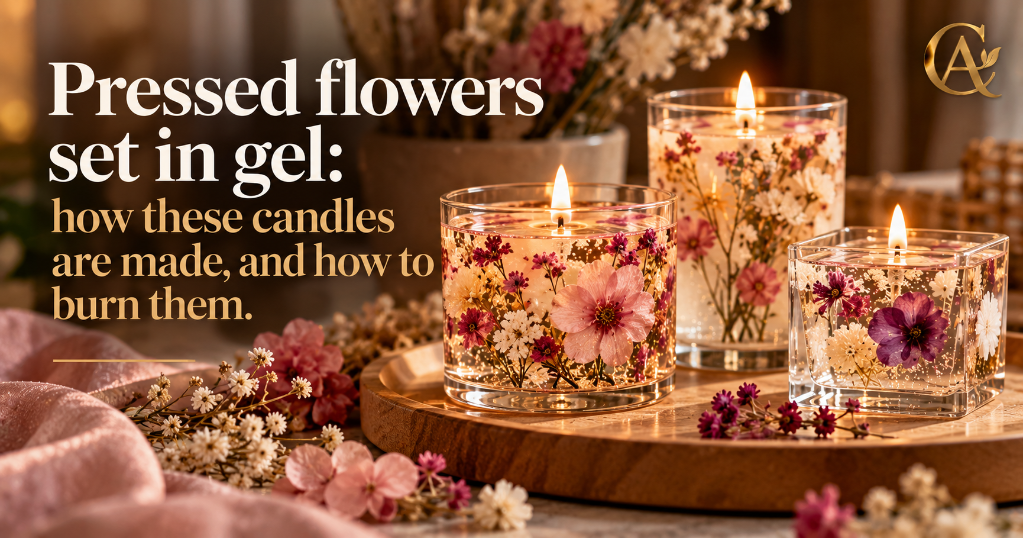
Pressed flowers set in gel: how these candles are made, and how to burn them
A botanical gel candle is built in layers around real dried flowers. They are the most-photographed candles we make and the most misunderstood.
By The Candle Alchemist ·
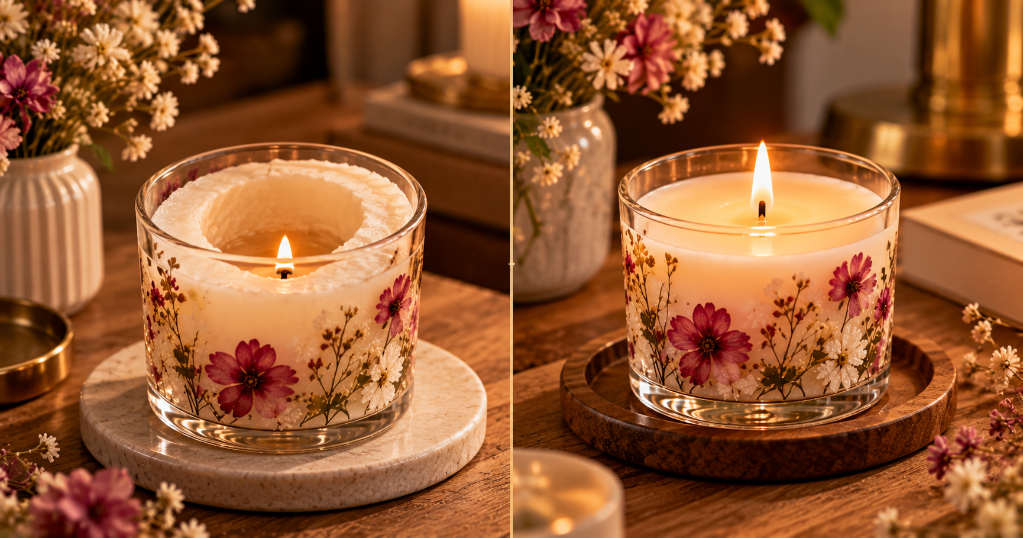
Why your candle tunnels — and how to stop it happening again
Tunnelling is not a fault in the candle. It is set by what you do in the first two hours, and once it starts it is very hard to undo.
By The Candle Alchemist ·
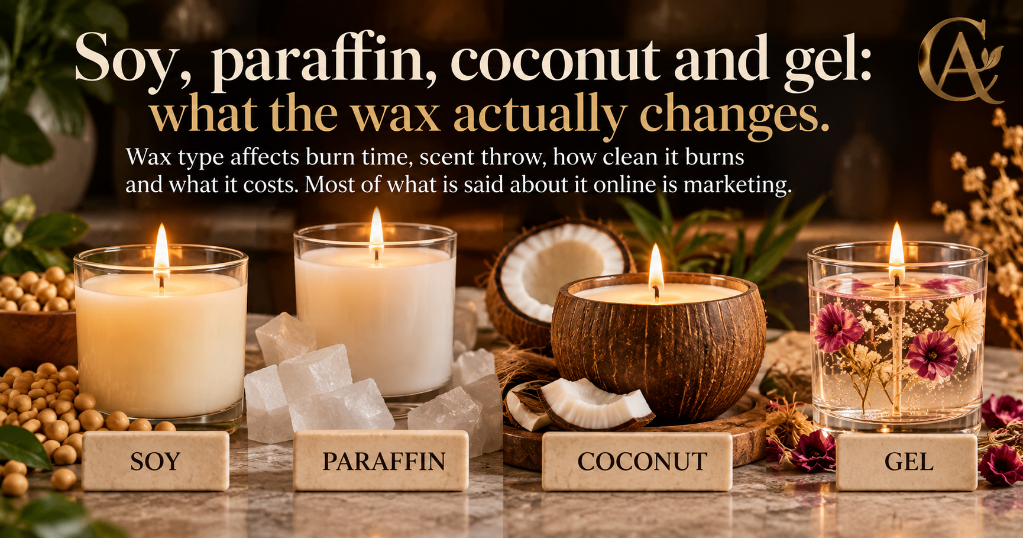
Soy, paraffin, coconut and gel: what the wax actually changes
Wax type affects burn time, scent throw, how clean it burns and what it costs. Most of what is said about it online is marketing.
By The Candle Alchemist ·